ServicesRoof Repair
Roof Repair in Elsmere, KY, Done Before the Season Turns
We fix the part of your roof that is failing: a cracked pipe boot, a few wind-lifted shingles, flashing pulled loose at a chimney. Each repair is matched to the materials already on your home and finished before the next freeze or spring storm can test it.
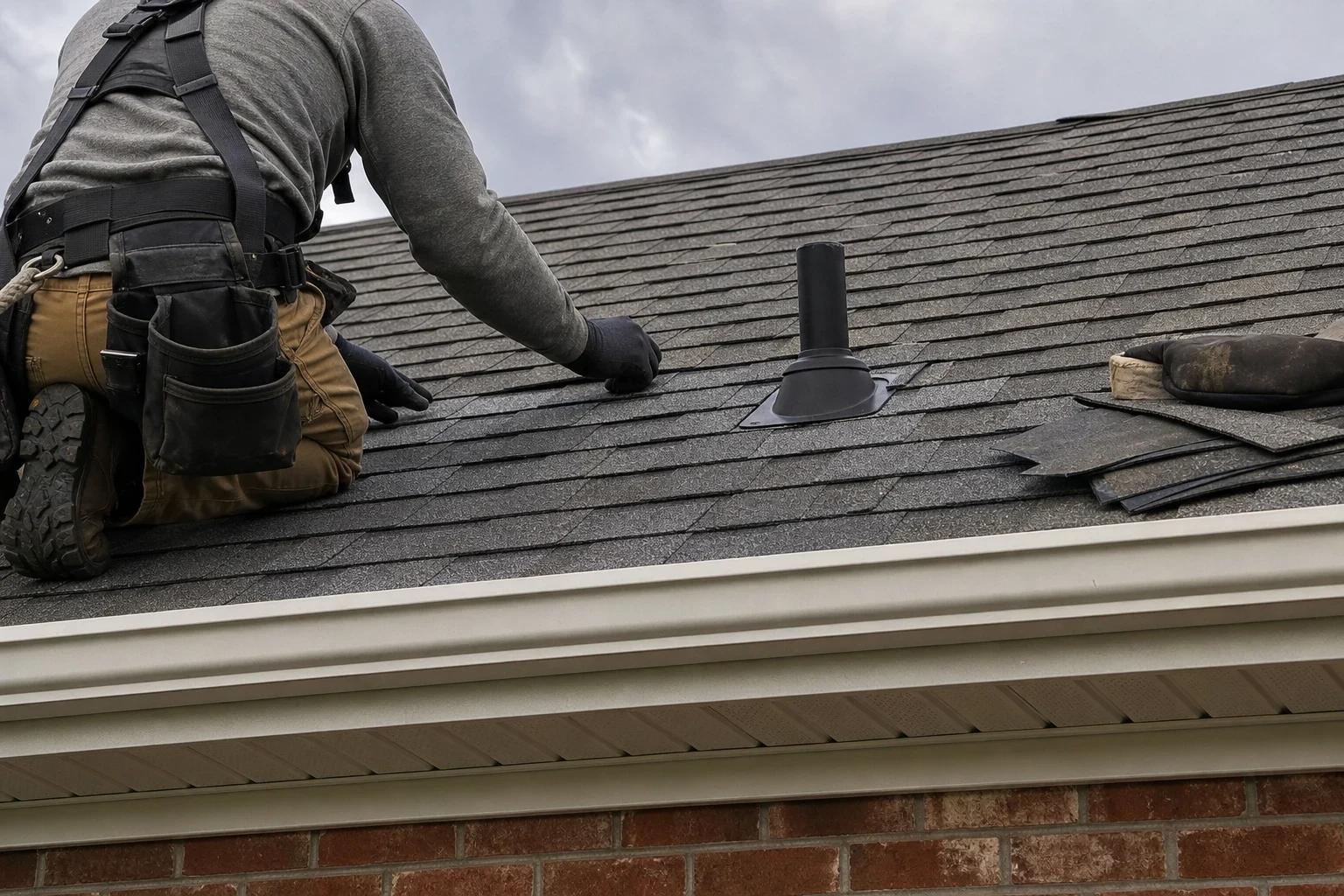
A focused repair, when the rest of the roof is sound
Most leaks start at one small detail, not across the whole roof. Water finds a split rubber collar around a vent pipe, a nail that has backed out, or a valley where the shingles have worn thin. Fixing that spot well, with matching materials and proper sealing, can add years to a roof that still has life left in it.
Repair makes sense when the shingles around the trouble still lie flat, hold their granules and bend rather than crack. If we find widespread wear, we will tell you plainly and explain what roof replacement would involve, so you can weigh both. You decide. We lay out what we saw.
Timing matters too. Northern Kentucky winters bring repeated freeze and thaw, and a small gap in October can become a stained ceiling by February. We prefer to close those gaps in late summer and autumn, while the shingles are warm enough to seal properly.
What our roof repair work covers
Shingle replacement and resealing
We replace cracked, creased or missing shingles with the closest available match in profile and color, then hand-seal the tabs so they lie flat. Where a whole slope has lost its seal, we tell you rather than patching around it.
Flashing at chimneys, walls and skylights
Step and counter flashing is where many leaks begin. We reset or replace bent and rusted pieces and seal them correctly, rather than smearing roofing cement over the joint and hoping it holds.
Pipe boots and roof vents
Rubber collars on plumbing vents dry out and split after years of sun. We fit new boots and check vent caps and exhaust hoods for loose fasteners.
Valleys and ridge caps
Valleys carry the most water on any roof, and ridge caps take the most wind. We repair worn valley shingles and replace cracked caps so both shed water the way they were built to.
Soft decking under the leak
If the sheathing beneath a leak has gone soft, we cut out the damaged section and install new decking before the shingles go back on. You see photos of it before we proceed.
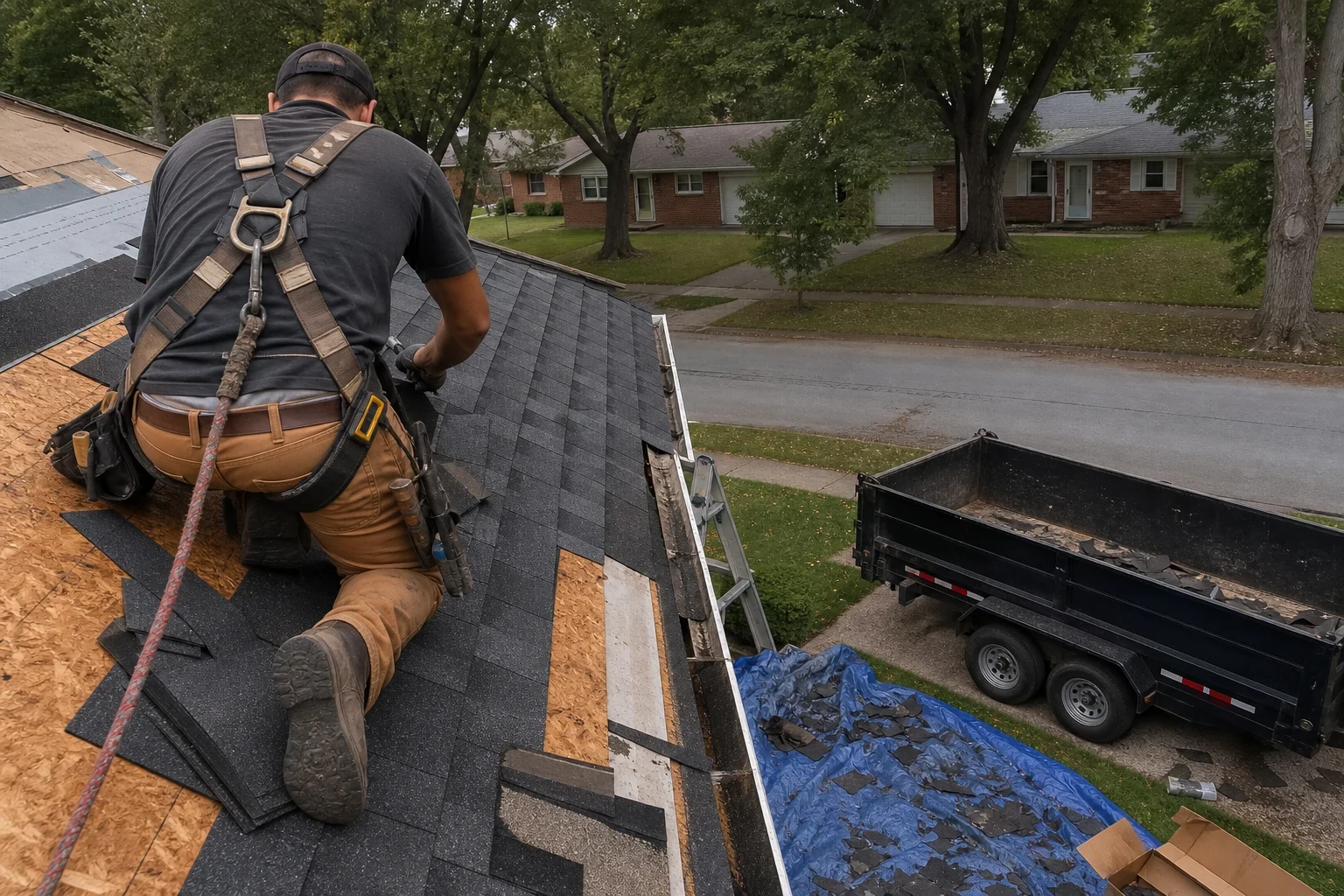
Signs your roof is asking for a repair
- Ceiling stains after rain or snowmelt
- A brown ring on a ceiling or a damp patch in the attic means water is getting past the roof. Stains that show up after snow melts often point to an ice dam or a flashing problem.
- Shingles in the yard or gutters
- A few tabs on the lawn after a windy night mean the seal strip has let go. The exposed nails and felt below will take on water with the next rain.
- Heavy grit at the downspouts
- Piles of granules washing out of the gutters suggest certain areas of the roof are thinning faster than the rest.
- Curled or cracked shingles on sunny slopes
- South and west slopes take the most summer heat. Edges that cup upward or crack across the tab let wind-driven rain slip underneath.
- Daylight in the attic
- On a bright day, look up from the attic. Pinpoints of light around vents or the chimney mark gaps that water will find too.
How a repair day runs
- 1
A free inspection and a clear answer
We climb up to study the trouble spot and the slopes around it, and when a leak is involved we trace it from the attic side as well. Photos come with a written estimate that names the cause and the fix, item by item.
- 2
Scheduled around the weather
We pick a dry day with workable temperatures, since shingle sealant needs warmth to bond. You know the plan ahead of time.
- 3
Careful work at the source
We protect plantings and the ground below, remove only the damaged materials, and rebuild the spot with matching shingles, new flashing or a new boot as the job requires.
- 4
Cleanup and a final look
We sweep the yard for nails with a magnet, clear our debris from the gutters, and send you photos of the finished repair.
What shapes the cost of a roof repair
Every repair is priced after we have seen the roof, because the cause decides the work. Your written estimate lists each item, so nothing appears later that you did not expect. If something hidden turns up once materials come off, we stop and show you before going further.
- Where the problem sits
- A lifted shingle on an open slope is quick work. Flashing behind a chimney or around a skylight takes more time and more parts.
- Pitch and access
- Steep roofs need extra safety setup, and a two-story home takes longer to work on than a single-story one.
- Matching your materials
- Older or discontinued shingles can be harder to find, and a close color and profile match sometimes means a special order.
- What is underneath
- Sound decking keeps a repair simple. Soft or rotted sheathing adds a replacement step and the material that goes with it.
Roof repair questions we hear often
- Will the new shingles match the rest of my roof?
- We get close, but expect a slight difference at first. Even the identical product looks a little darker when new, because the shingles around it have spent years in the sun. We bring samples to hold against your roof, pick the nearest profile and color, and the contrast fades as the new pieces weather.
- Should I repair or replace an older roof?
- It depends on the condition of the shingles around the problem more than the age alone. If they still flex and hold their granules, a repair is often the sensible choice. If they crack when lifted or the same issue appears in several places, we will say so and walk you through the cost of each path.
- What time of year is best for a roof repair?
- Late spring through early fall is ideal, because sealant strips bond best in warm weather. Many repairs can still be done in cooler months, planned around milder days. Fixing small problems before winter keeps freeze and thaw from widening them.
- Will you need to come inside my home?
- Most repairs happen entirely outside. We may ask to look in the attic during the inspection to trace a leak to its source, which helps us fix the right spot the first time.
- Is the inspection really free?
- Yes. We look over the roof, take photos and give you a written estimate at no charge, with no obligation to move ahead.
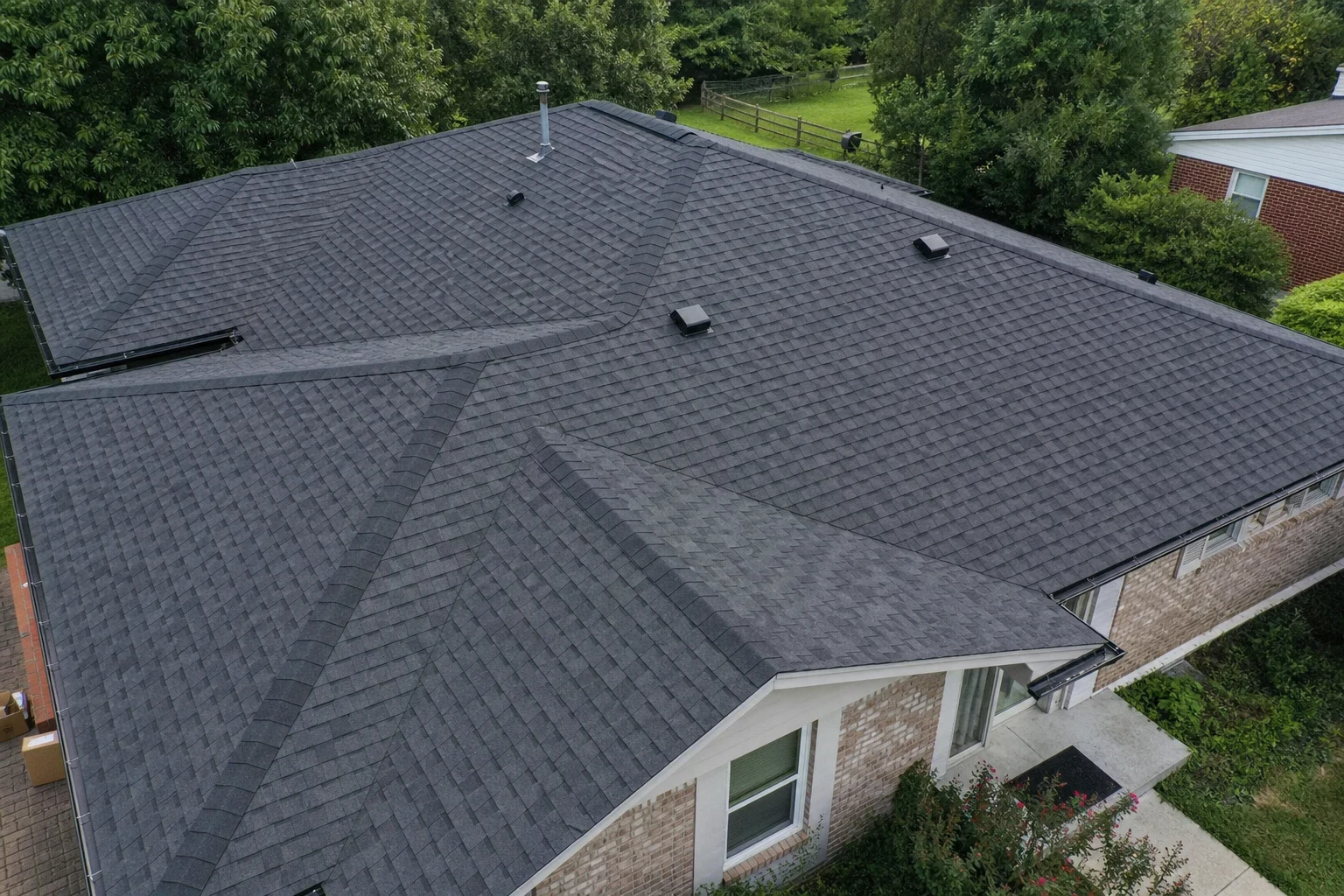
Close the small gaps before the next season arrives
A stain on the ceiling, a tab in the grass or a loose strip of flashing is enough reason to ring us, and we will set a dry day to look it over at no cost. First visit with us? Our current offer is Limited Time — $50 Off Your First Service Call.