ServicesSiding
Siding Repair and Replacement in Elsmere
We repair damaged siding and replace worn walls with vinyl or fiber cement, paying the same attention to the house wrap, flashing and trim you never see. The goal is simple: walls that shed water, hold their color and are ready before the next hard freeze.
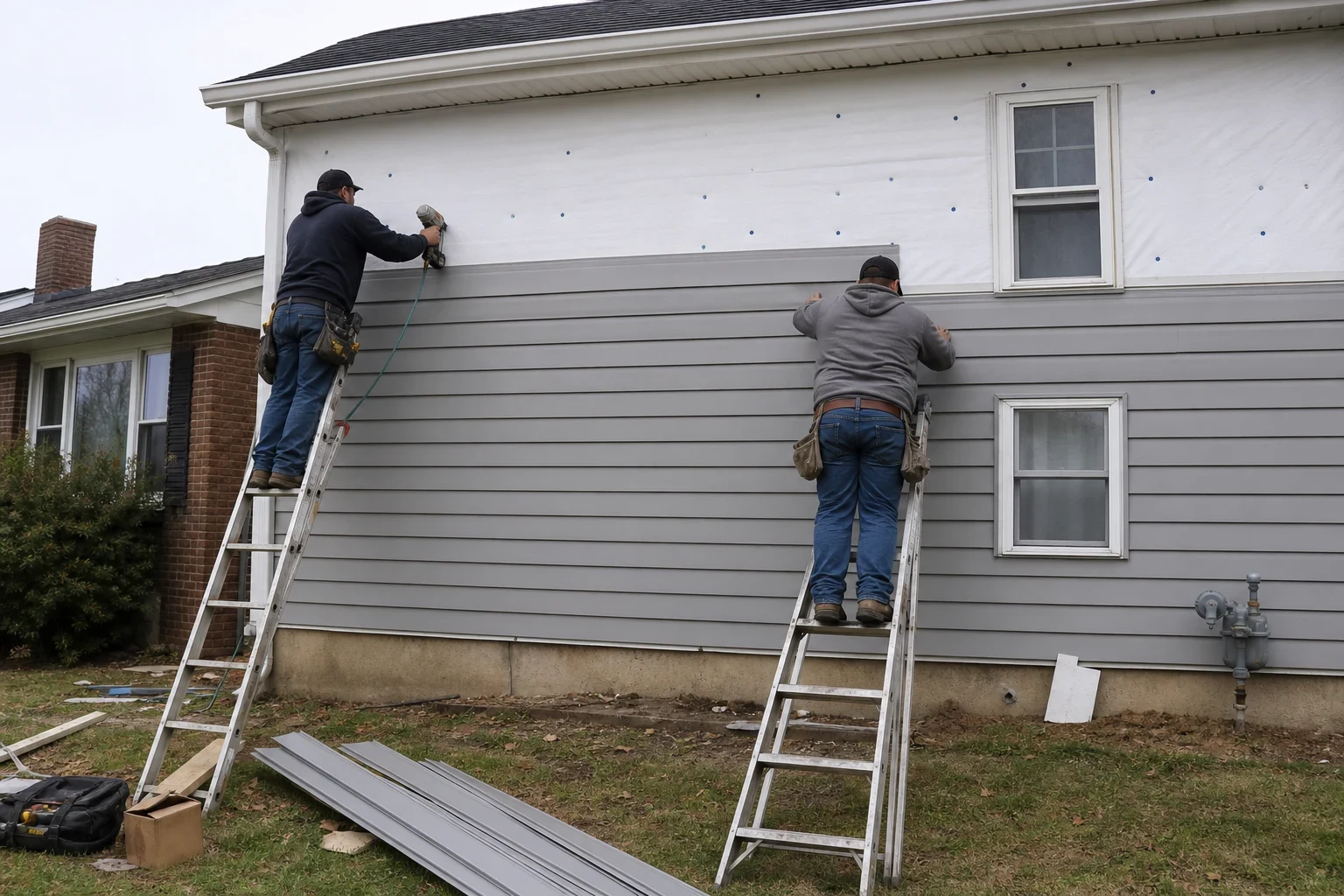
When Siding Work Is the Right Call
Siding is your home's rain jacket. When a panel cracks, warps or pulls loose, water gets behind it, and the damage that follows shows up slowly: soft sheathing, peeling paint inside, mildew along a window. A small repair caught early keeps that from happening.
Sometimes a repair is enough. A few panels torn by wind or a section cracked by a stray ball can be replaced and matched. When the siding is faded unevenly, brittle across whole walls or failing at the seams everywhere, replacement usually costs less over time than chasing problems one panel at a time. We tell you which one your walls need and show you why.
Timing matters too. Northern Kentucky winters bring repeated freeze and thaw, and water trapped behind siding expands each cold night. We like to finish siding work in late spring through early fall, so the walls go into winter sealed.
What Our Siding Work Includes
- A wall-by-wall look first
- We check every elevation, press on suspect areas and look at the sheathing wherever a panel is already loose. You get photos of what we found.
- Panel repair and color matching
- For localized damage we remove and replace only the affected courses. We bring sample pieces so you can judge the match in daylight against the weathered siding.
- Full replacement in vinyl or fiber cement
- We walk you through how each material behaves. Vinyl is light and needs little upkeep; fiber cement is heavier, resists impact better and takes paint well.
- House wrap and flashing
- Behind new siding we install a weather-resistant barrier, then flash windows, doors and roof-to-wall joints so water is turned outward. This layer does most of the real work.
- Trim, soffit and fascia details
- Corners, J-channel and trim are cut and fastened so panels can expand and contract with temperature without buckling. Finished edges are where careful work shows.
- A clean site at day's end
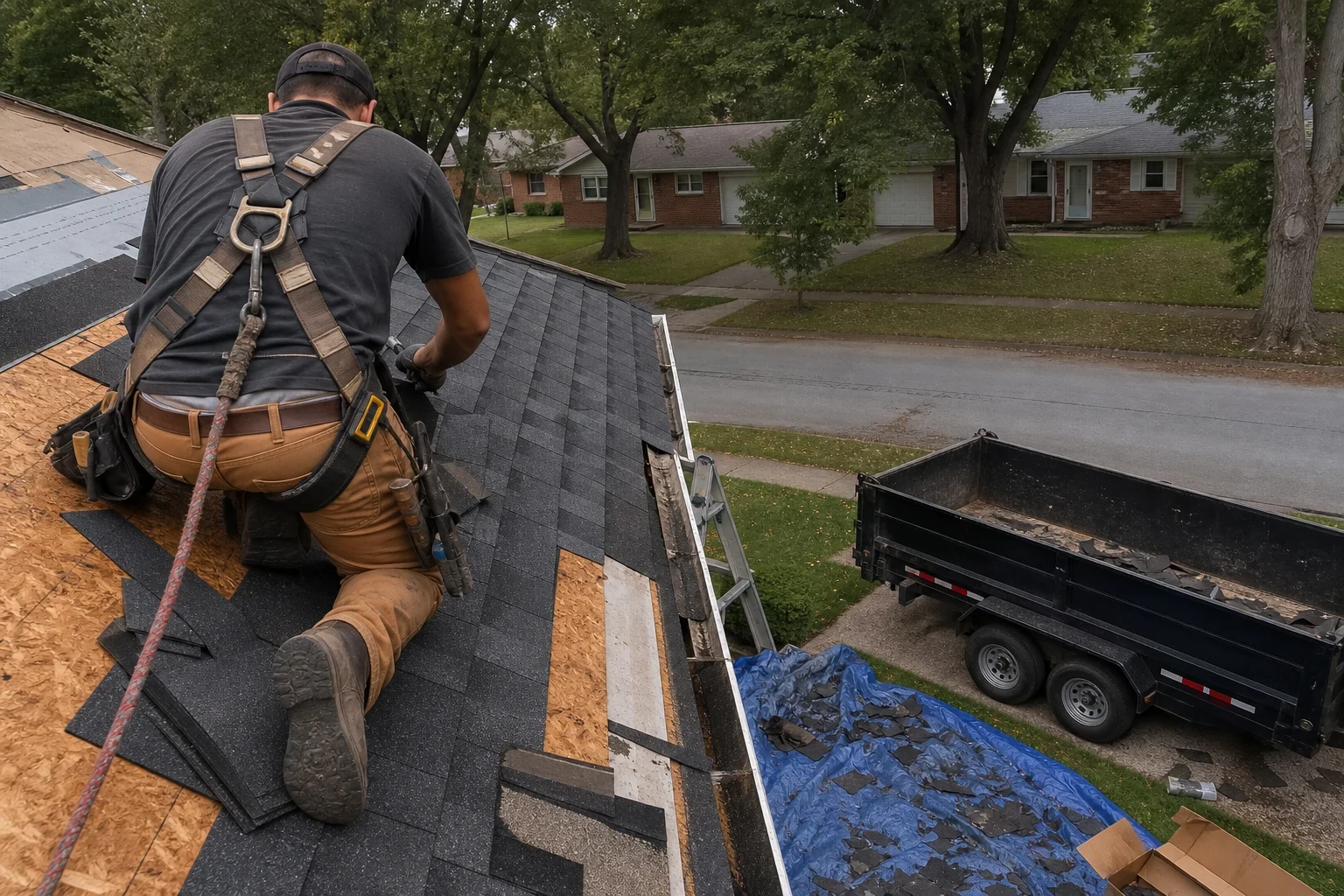
- Torn-off panels and scrap go straight into the trailer as we work. Before the crew heads out, a rolling magnet passes over the lawn, beds and drive so no stray nails are left for tires or bare feet.
Signs Your Siding Needs Attention
Warped or bulging panels
Waves in vinyl often mean it was nailed too tight or has been heated by reflected sun. Bulges can also point to swelling sheathing underneath.
Cracks, holes and loose pieces
Hail, wind and cold-weather impacts crack panels. Each opening lets rain reach the wall.
Chalky or uneven fading
Some fading is normal. Heavy chalking or one wall far lighter than the rest suggests the material is near the end of its life.
Moisture marks indoors
Peeling paint, damp drywall or a musty smell near an exterior wall can trace back to failed flashing behind the siding.
Soft spots and mildew
If a section gives when you press it, or mildew keeps returning in the same place, water is likely sitting behind the panels. Overflowing gutters are a common cause, which is why we look at them too.
How a Siding Job Runs
- 1
Free estimate at your home
We inspect the walls, measure each elevation and explain repair versus replacement. You receive a written, line-item estimate.
- 2
Choosing material and color
We bring samples of profiles and colors, and talk through trim options so the finish suits the house. We order once you have decided, not before.
- 3
Preparing the site
Before work starts we cover plants near the walls, move what needs moving with your permission and set ladders on stable footing away from your windows.
- 4
Removal, repair and installation
Old siding comes off one wall at a time so your home is never left exposed for long. We repair any damaged sheathing we find, show it to you first, then wrap, flash and install.
- 5
Final walk-through
We walk every wall with you, check trim and caulked joints, and make sure the yard is clean before we call the job finished.
What Moves the Price of Siding
Siding is priced from the walls themselves, so we measure before we quote. The biggest variables are how much surface we cover, the material you choose and what we find once old panels come off. Your written estimate lists each item so nothing arrives as a surprise later.
- Wall area and stories
- More square footage means more material and labor. Second-story walls need extra setup and safety equipment.
- Material and profile
- Fiber cement costs more to buy and install than vinyl, and premium profiles or thicker panels add to either.
- Condition of the sheathing
- Rotted or soft sheathing must be replaced before new siding goes on. We price this per section and show you photos before doing it.
- Windows, doors and trim
- Each opening needs flashing and trim work, so a wall with many windows takes longer than a plain one.
- Removal of old layers
- Some older homes have siding installed over an earlier layer. Taking both off adds labor and disposal.
Siding Questions We Hear Often
Something not covered here? (859) 249-8940
Can you match my existing siding for a repair?
Often, yes, though weathered vinyl rarely matches new stock perfectly. We bring samples and compare them on the wall. If the match is poor on a front-facing wall, one option is moving original panels there from a less visible side and using new ones in back.
Should I choose vinyl or fiber cement?
Vinyl is lighter, costs less and needs only occasional washing. Fiber cement stands up better to impacts and holds paint for years, but it is heavier and takes longer to install. We will lay out both for your house and let you decide.
Do I have to stay home during the siding work?
No. Everything happens on the outside of the house, so most people keep their usual routine. It helps if you can be around briefly on the first morning to confirm colors and anything we plan to move, and again at the end for the walk-through.
Can siding be installed in winter?
It can, but vinyl gets brittle in deep cold and is harder to fit well. We prefer late spring through early fall, and we will be honest if waiting a few weeks gives you a better result.
Will you look at my roof and gutters too?
If you would like. Many wall leaks start at a roof-to-wall joint or an overflowing gutter, so we mention anything we notice. Roof inspections and gutters are services we offer, and we only quote them if you ask.
Get Your Walls Ready for the Next Season
Tell us what you are seeing on your siding and we will come out, look closely and give you a written estimate. There is no charge for that visit.