ServicesRoof Replacement
Roof Replacement in Elsmere, Timed for the Season Ahead
When a roof has given all it can, we replace it from the deck up. Old layers come off, soft wood is replaced, and new underlayment, flashing and shingles go on with care. We plan the work for a good weather window so your home is closed in before the hard months.
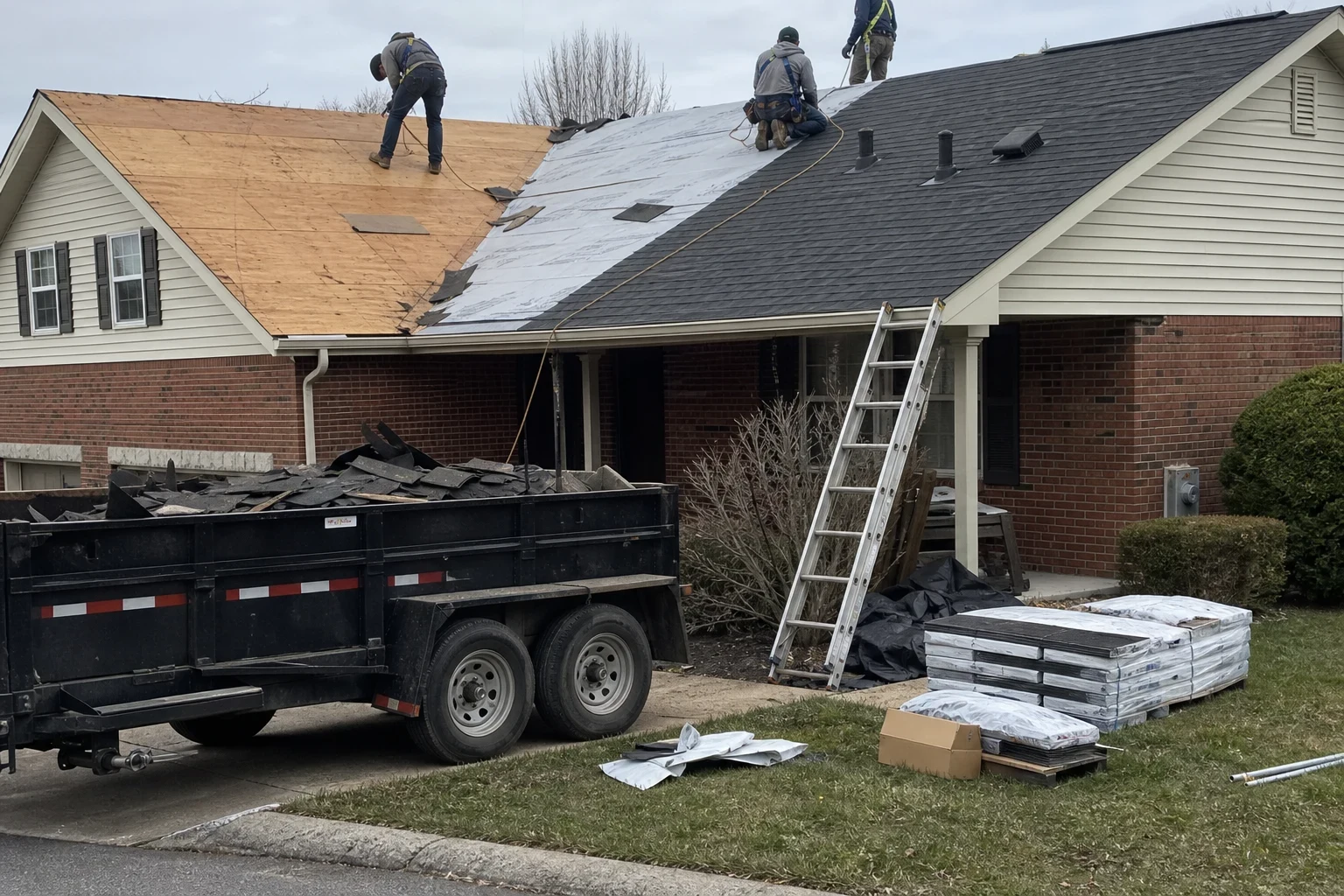
When a new roof makes more sense than another repair
Roofs tend to wear out gradually. Granules wash off, shingle edges begin to curl, and a stain turns up in a new room each spring. There comes a point where patching no longer buys real time, and replacing the roof costs less across the next ten years than chasing each new drip. If a repair will still hold, we say so plainly, and our roof repair page covers that work.
Timing matters as much as materials. Asphalt shingles seal best in mild, dry weather, so we prefer to schedule replacements from late spring through fall. Northern Kentucky's freeze and thaw cycles are hard on a tired roof, and a new one installed ahead of winter has warm weeks to bond before ice and snow test it.
What a full replacement includes
- Tear-off to the deck
- We strip the old shingles, underlayment and tired flashing until bare sheathing shows. Shingling over an existing layer conceals damage and adds weight, so every roof we replace starts from a clean deck.
- Decking check and repair
- With the deck exposed, we walk every section and replace soft or delaminated sheathing. You see photos of what we found before anything is covered.
- Ice and water barrier
- Eaves, valleys and the areas around chimneys and skylights get a self-adhering membrane, since that is where ice dams and driving rain do the most harm. Synthetic underlayment covers the rest of the deck.
- New flashing and ventilation
- Drip edge, step flashing, pipe boots and roof vents are replaced rather than reused. Balanced attic airflow helps shingles last longer and keeps winter condensation off the underside of the deck.
- Shingles set to the manufacturer's pattern
- We nail to the specified pattern, run starter strips along the edges and finish the ridge with matching cap shingles. Those quiet details decide how the roof holds in a strong wind.
- Cleanup and a final walk
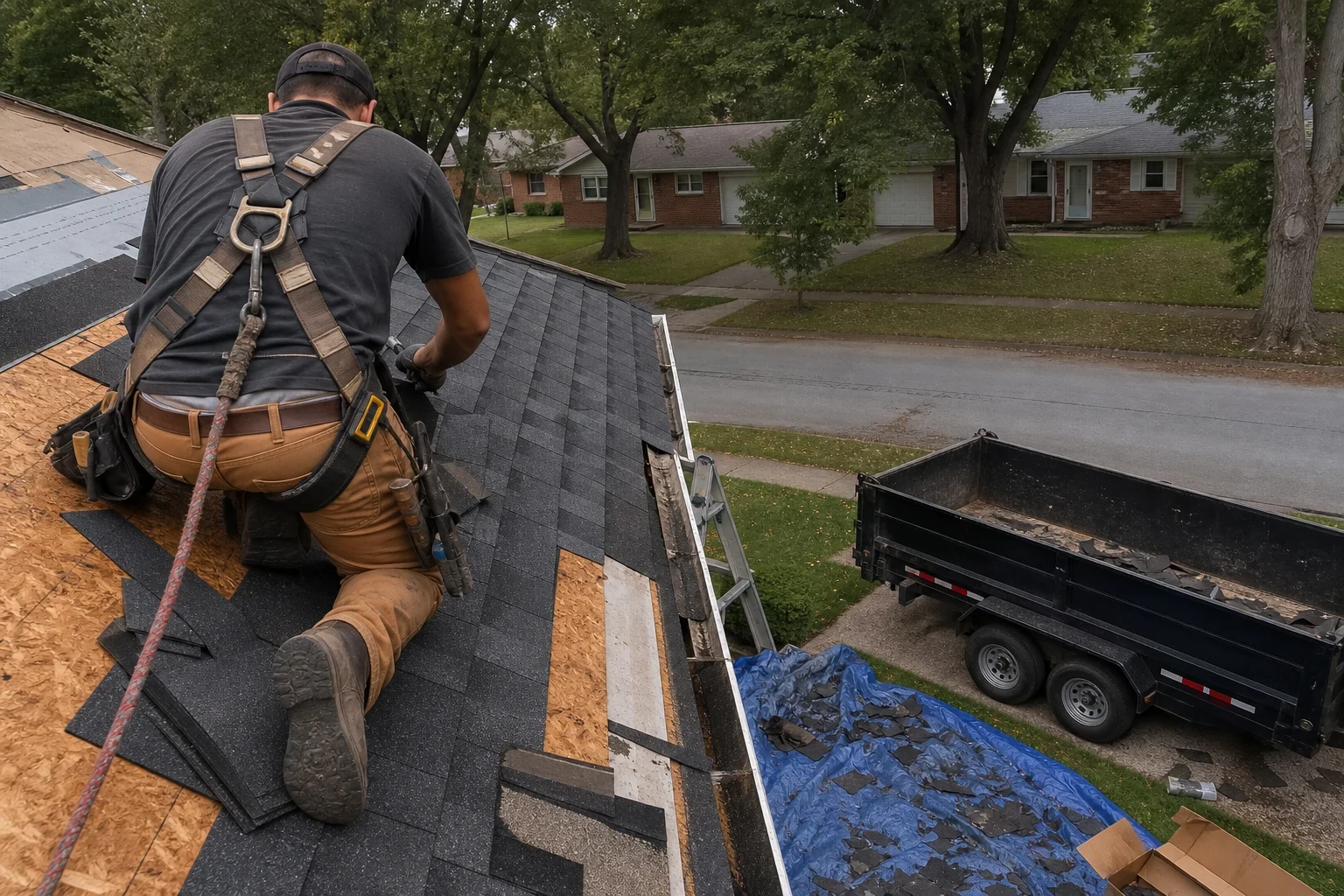
- Tarps protect your shrubs and siding while we work, and we sweep the yard and driveway with a magnet for stray nails. Before we leave, we walk the property with you.
Signs your roof is ready to be replaced
Curling or cracked shingles
Shingles that cup, curl at the edges or crack across the tab have lost their flexibility. They lift in wind and let water work underneath.
Granules collecting in the gutters
A handful of grit after a new install is normal. Steady piles years later mean the protective surface is wearing away and the asphalt below is exposed to sun.
Stains across several rooms
A single drip can usually be fixed. When stains appear in different rooms, the underlayment beneath the shingles has likely worn out as a whole.
Soft spots or a sagging line
A roof that dips between rafters or feels spongy underfoot often has wet, weakened decking. That needs attention before the next heavy snow.
Damp or daylight in the attic
Pinpoints of light through the boards, frost on the nails in winter or a musty smell all suggest the roof is no longer keeping weather out.
How a replacement runs, start to finish
- 1
Free estimate and roof check
We look at the roof surface, the flashing and the attic, then talk through what we saw. You get a free estimate with a recommended window for the work.
- 2
Materials and a date
We help you choose a shingle line and color that suits your home, and we set a start date around the forecast. If rain moves in, we let you know and reschedule rather than leave a roof open.
- 3
Prep and tear-off
Tarps go down over landscaping and a dumpster or trailer is placed where it won't block you in. We strip only as much as we can dry in that same day, so no bare sheathing sits open through the night.
- 4
Installation
Decking repairs, membrane, underlayment, flashing, vents and shingles go on in order. Many homes are finished in one or two working days, depending on size and pitch.
- 5
Cleanup and walkthrough
We clear debris, run the magnet sweep and check the gutters for granules and nails. Then we show you the finished roof and answer any questions.
What shapes the price of your roof replacement
We price each replacement from the measurements we take and the condition we find. Your estimate lists the work line by line so you can see where the money goes, with no surprise charges added at the end. A few things move the number more than others.
- Size and pitch
- Larger roofs need more material and labor. Steep slopes require extra safety setup and slow the crew down.
- Old roofing underneath
- Some houses carry a second course of shingles from an earlier reroof. Every extra course adds tear-off hours and fills more of the dumpster, and both show up on the estimate.
- Condition of the decking
- We can't see every board until the shingles are off. The estimate explains how replacement sheathing is priced, and we show you photos before installing any.
- Material choice
- Standard architectural shingles, heavier designer lines and impact-rated products each carry different costs. We explain the trade-offs in durability and appearance.
- Chimneys, skylights and permits
- Each penetration needs its own flashing work. Where your city requires a permit, we pull it and list the fee on the estimate.
Roof replacement questions
Something not covered here? (859) 249-8940
What is the best time of year to replace a roof?
Late spring through early fall gives shingles the warmth they need to seal properly. We can work in cooler months on dry days, but we take extra care with sealing. Booking ahead of winter means your home goes into the cold season with a sound roof.
Can you put new shingles over my old ones?
We recommend against it. A full tear-off lets us inspect and repair the decking, install an ice and water barrier, and replace flashing properly. Overlays also add weight and can shorten the life of the new shingles.
Will my insurance pay for a new roof?
Insurance usually covers sudden damage from wind or hail, not normal wear. If storms played a part, we photograph and document what we find so you can share it with your adjuster. Our storm damage repair page explains that process in more detail.
Should I plan to stay home during the job?
There's no need to stay for every hour. We'd like a few minutes with you as the crew arrives and again at the end, when we look over the finished roof together. The first morning of tear-off is noisy, so a quiet room or an outing helps if you work from home. Leaving your car on the street frees the driveway for our trailer, and it's wise to take framed pictures off upstairs walls for a day or two.
Should I replace my gutters at the same time?
If your gutters are sagging, leaking at the seams or pulling away from the fascia, doing them with the roof makes sense since the edge is already open. If they are in good shape, we protect and keep them. Our gutters page covers that work.
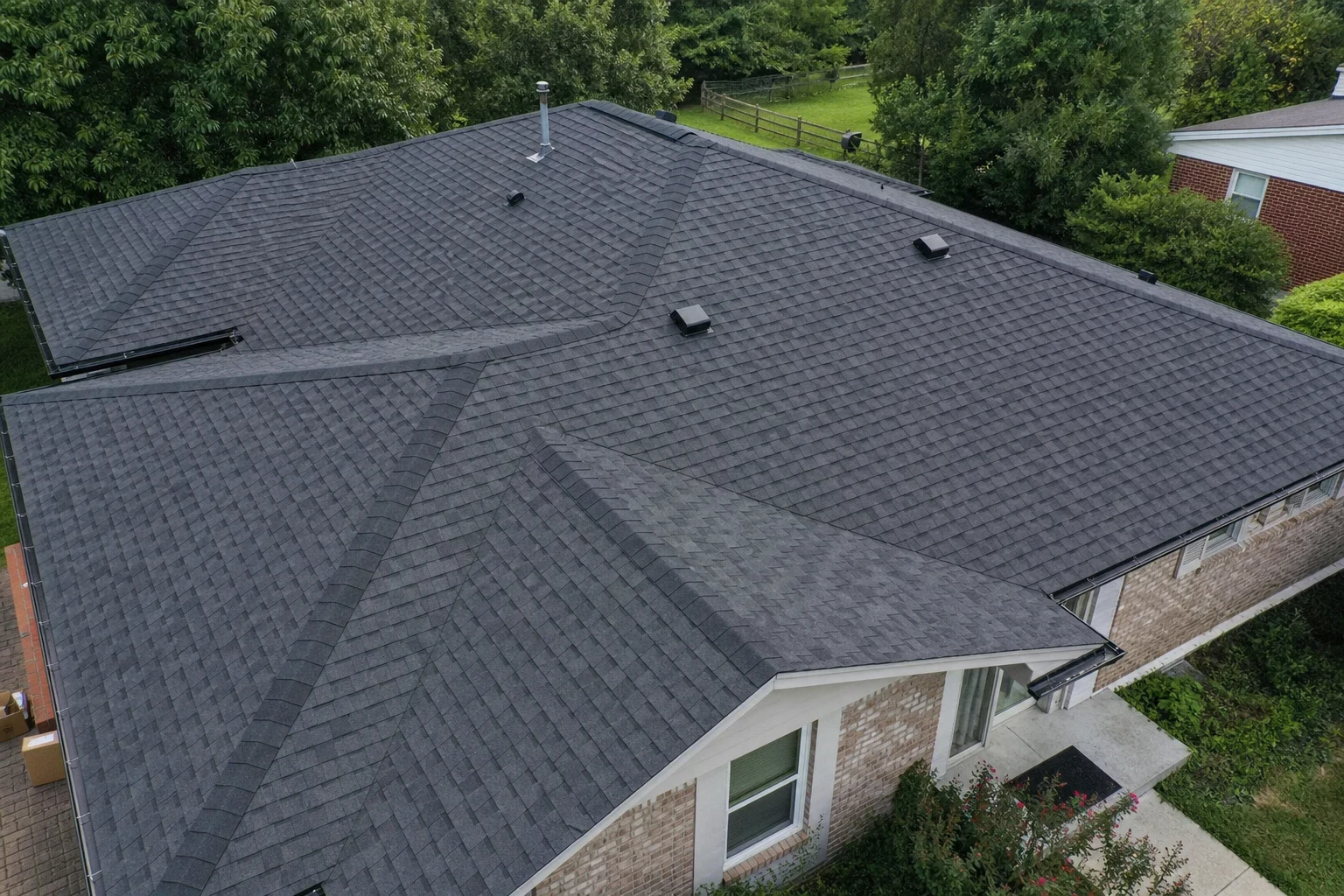
Get your new roof planned before the weather turns
We'll look over your roof and attic, explain what we see, and give you a free estimate with a window that suits the season.